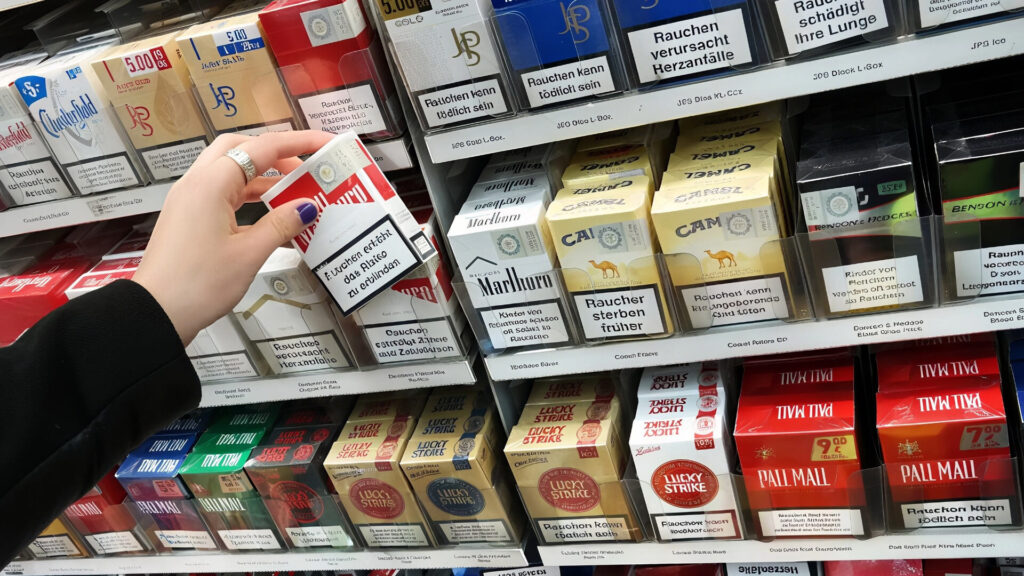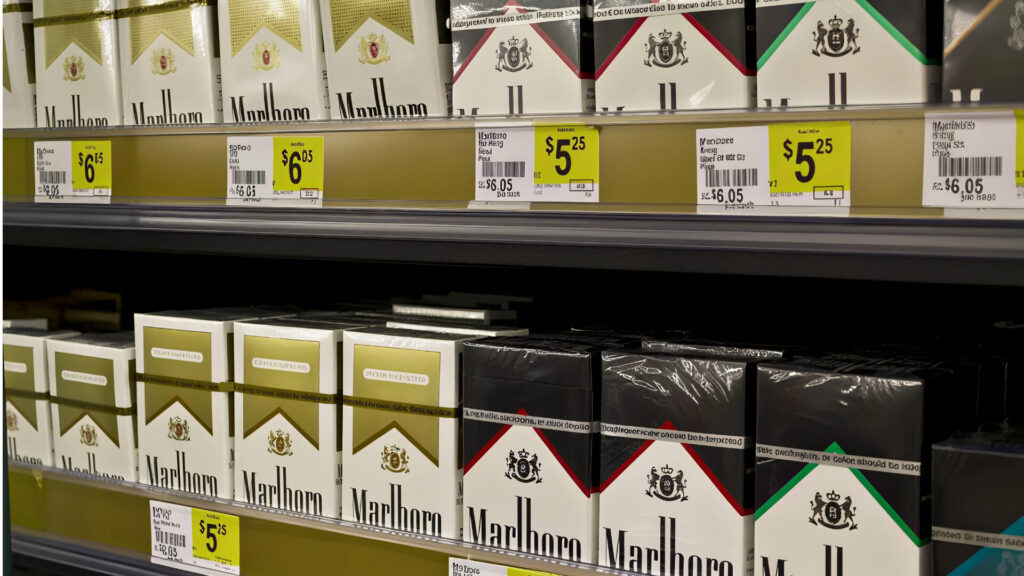
If you’re a smoker, you’ve probably asked yourself this at some point: why do most cigarette packs have 20 sticks, while some have 10 or even 25? What actually decides how many cigarettes go into a pack? Is it just a business choice, or are there laws behind it? And how do these rules differ around the world?
In this article, we’re going to break it all down. From legal regulations to market habits, you’ll get a full picture of what shapes cigarette pack sizes. Whether you’re a tobacco enthusiast or a brand owner, there’s something here for you.
Let’s get into it!
What is the standard number of cigarettes in a pack?
Before we talk about how many cigarettes are in a pack, it’s important to understand the concept of standardized cigarette packaging. As a standardized product, cigarettes need standardized packaging. This brings many benefits in production, transportation, and sales.
Production: Because the packaging is standardized, factories can use the same cutting dies and packing machines without constantly changing equipment. This saves time and reduces costs.
Transportation: Standard-sized cigarette packs are easier to stack, pack, and box. Shipping containers like cartons and pallets can be designed to the same specifications, saving space and cutting shipping costs.
Sales: Retailers, such as convenience stores and supermarkets, can use uniform shelves and vending machines that fit these standard sizes, making storage and display easier. Also, health warnings required by law can be placed in fixed spots on the pack, helping with regulation and compliance.
Thanks to these advantages, cigarette packaging gradually became standardized. The most common specification today is the 20-cigarette pack. But why this number? Let’s take a closer look at how this standard was formed.
The History Behind the Standard 20-Cigarette Pack

In the early days, tobacco was mostly used by chewing, smoking in pipes, or rolled into cigars. Later, people started rolling tobacco in paper, making smoking more convenient. But at that time, cigarettes were still handmade and not part of an organized industry.
That changed in 1880, when James Bonsack, an American inventor, created the first automatic cigarette-rolling machine. This marked the beginning of industrial cigarette production. During this period, cigarette sizes began to standardize — with fixed lengths, diameters, and packaging — to allow for shared cutting dies, packing machines, and transport systems.
In 1915, the American Tobacco Company introduced the flip-top hard pack. This new packaging design protected cigarettes from damage and dryness, while making them easier to carry. It also brought a more unified and practical format to cigarette packaging.
By the mid-20th century, American brands like Marlboro, Camel, and Lucky Strike were selling cigarettes worldwide. As demand grew, standardized packaging became even more important. A consistent box size and cigarette count made global shipping and sales easier. Local brands in other countries also followed the lead of these American giants, gradually aligning with the same packaging format.
Eventually, the 20-cigarette pack became the global standard — balancing consumer habits with manufacturing efficiency.
Size of the Standard 20-Cigarette Pack

Today, a typical hard pack for 20 cigarettes measures around 85mm × 55mm × 22mm, while a soft pack is slightly slimmer at 83mm × 55mm × 20mm. However, as cigarette sizes have evolved over time, the dimensions of the standard 20-cigarette pack have also changed to fit different lengths.
According to the Centers for Disease Control and Prevention (CDC), cigarettes can vary in length and are generally categorized as follows:
- Regular unfiltered cigarettes: 68–70 mm
- King-size filtered cigarettes: 79–88 mm
- Filtered longs: 94–101 mm
- Extra-long cigarettes: 110–121 mm
As the cigarette industry has evolved and consumer preferences have become more diverse, packaging formats have expanded beyond the standard size. Today, most standard cigarette packs contain 20 cigarettes, and cigarette lengths can vary based on format.
Here are the most common cigarette size categories:
- Standard Size: Usually around 84 to 85 millimeters (3.3 inches) in length. This is the classic cigarette size used in most regular 20-stick packs and serves as the industry baseline for packaging and machinery design.
- King Size: Slightly longer than standard, typically 84 to 90 millimeters (3.3 to 3.5 inches). This is currently the most widely used size for filtered cigarettes globally.
- Long Size (Super Kings): Ranging from 100 to 120 millimeters (3.9 to 4.7 inches). These cigarettes offer a longer smoking experience and are often packaged in taller boxes.
- Slim Size: These have a narrower diameter and typically measure 100 to 120 millimeters in length. Slims are popular for their sleek and elegant appearance, especially in premium markets.
Despite the differences in size and shape, most packs still contain 20 cigarettes, keeping consistency across production, regulation, and consumer expectations.
Alternative Pack Sizes and the Factors Behind Cigarette Count
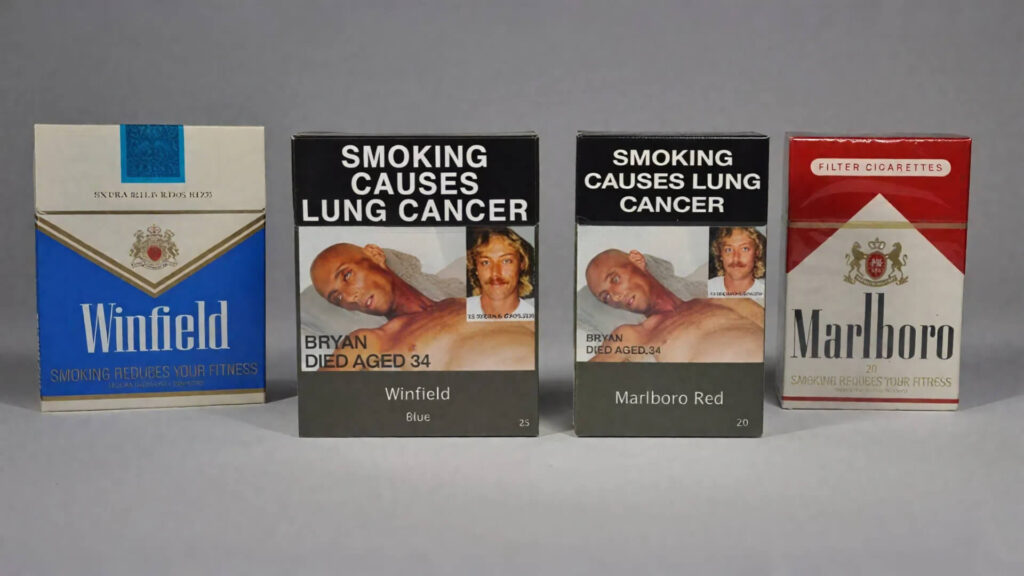
While the 20-cigarette pack is the global standard, other pack sizes have emerged in different markets due to local regulations, marketing strategies, and consumer preferences. These alternatives offer greater flexibility for both brands and consumers:
10-cigarette packs
These smaller packs were originally introduced as a low-cost option for casual smokers or those looking to limit their intake. They also served marketing purposes, such as product sampling, promotions, or targeting price-sensitive demographics.
However, public health advocates have raised concerns about their appeal to teenagers and first-time smokers, arguing that smaller packs make it easier to start smoking. As a result, many countries — including the UK, Australia, and parts of the EU — have banned the sale of cigarette packs containing fewer than 20 sticks.
Still, 10-packs remain available in some parts of Asia, the Middle East, and Latin America, where affordability and pricing flexibility are key factors in purchasing behavior.
25-cigarette packs
Common in countries like Canada and Australia, these packs offer a better price-per-stick value while providing a longer-lasting supply for regular smokers. They are typically marketed as more economical in the long run.
30- or 35-cigarette packs
These are less common and usually appear as limited editions or specialty formats. They are designed to appeal to heavy smokers or consumers looking for bulk value. Such packs often come with unique branding or collectible packaging.
50-cigarette cartons or double packs
Often sold in duty-free stores or wholesale outlets, these are not typical retail pack sizes but offer convenience for frequent travelers or bulk buyers. They may be structured as two or more packs joined together.
In most markets, tobacco control regulations set clear limits on the minimum and maximum number of cigarettes per pack, with the aim of discouraging youth access and maintaining labeling consistency. While 20 remains the standard for most consumers, these alternative sizes reflect how the industry adapts to regional needs, legal frameworks, and shifting consumer behaviors.
Minimum (and Maximum) Cigarette Count per Pack by Country

In the previous section, we mentioned that some countries have specific rules about how many cigarettes must be in a pack. Now, let’s take a closer look at how different countries and regions regulate the number of cigarettes allowed per pack.
Countries with mandated minimum 20 cigarettes per pack
- Australia: Legal minimum is 20 sticks. Packs may also come in 25, 30, 35, 40, 50 sticks (wikipedia).
- Canada: Minimum 20 cigarettes; 25-sticks are also legal. Plain packaging prohibits slim or longer cigarettes (wikipedia).
- United States: Minimum 20 sticks per pack (CFR Title 21). Some brands offer 25-stick packs (wikipedia).
- European Union (incl. UK, Ireland, France, Germany, etc.): EU Directive 2014/40/EU sets 20 cigarettes as a minimum. UK specifically bans packs below 20 (eur-lex).
- Malaysia: Sale of packs smaller than 20 cigarettes is prohibited (PMC).
- Pakistan: Ban on manufacturing or selling 10-packs. Currently being debated for exports theguardian (theguardian).
- Russia & Georgia: Only 20-cigarette packs are allowed – both minimum and maximum (PMC).
- New Zealand: Only 20 or 25 cigarette packs allowed under latest regulations (PMC).
Countries allowing packs larger than 20
- Australia, Canada, France, Ireland, and UK may legally distribute packs of 20, 25, 30, 35, 40, or 50 sticks (PMC).
- Ireland: Known to sell packs of 23–30 sticks in addition to the standard 20 (PMC).
Other regional notes
- Latin America (e.g., Brazil, Uruguay, Mexico, Argentina): Regulations focus more on warning labels and plain packaging rather than pack size (Ruenfo).
- Germany: Unlawful to sell packs with fewer than 19 cigarettes or 30g tobacco. Standard: 20 sticks per pack (wikipedia).
Conclusion
We hope this article has helped you gain a complete understanding of how many cigarettes are in a pack and offered valuable insights into cigarette packaging standards around the world.
At Ruenfo, we are a global leader in cigarette packaging solutions, trusted by tobacco brands across the world. From custom design and mass production to logistics and delivery, we provide a one-stop solution that saves you the trouble of coordinating between designers, factories, and shipping providers.
Whether you’re producing the standard 20-cigarette pack or a custom pack size, our professional support team is ready to offer fast, reliable, and expert service. Focus on building your brand—we’ll take care of the packaging.
Frequently Asked Questions (FAQ)
Why are there usually 20 cigarettes in a pack?
The 20-cigarette pack became the global standard because it balances consumer habits with manufacturing efficiency. It also fits well with packaging machines, legal warning labels, and retail display systems.
Are cigarette pack sizes the same in every country?
Not exactly. While most countries follow the 20-stick standard, some allow packs with 25, 30, or even 50 cigarettes. However, many governments have banned packs with fewer than 20 cigarettes to discourage youth smoking.
Can cigarette packs have fewer than 20 cigarettes?
In some regions, yes — especially in parts of Asia, Latin America, and the Middle East. But in countries like the UK, Australia, Canada, and EU nations, it’s illegal to sell packs with fewer than 20 cigarettes.
What’s the difference between hard packs and soft packs?
Hard packs are made of cardboard with a flip-top lid, offering better protection and longer shelf life. Soft packs are wrapped in foil and paper, more flexible but less durable. Both usually contain 20 cigarettes.
Do longer or slim cigarettes come in different pack sizes?
Not always. Even slim or long cigarettes are often sold in 20-stick packs. The box shape may vary, but the count typically stays the same to comply with retail and regulatory standards.
Can I customize cigarette pack sizes for my brand?
Yes! With packaging partners like Ruenfo, you can create cigarette packs in various sizes and formats, including 10, 20, 25, or more, depending on local laws and brand strategy.